I took a break, partly due to high workload at work, partly due to a short trip to my family. I did enjoy it, and even enjoyed driving that tiny, brand new Ford Fiesta I got from Hertz. That was a nice surprise, I paid for Ka, and got Fiesta.
Last two evenings before the departure (well, not exactly, last two evenings were mostly about packing, planning the trip, getting the Google Maps working on my phone etc etc).. what was I talking about? Oh yes. Last two evenings before the departure were about making the RFM12B work with Due. I finally decided on removing the display, and the freed SPI port is now used for RFM12B. I started porting the library to Due, but that turned out to be pretty complex task, as the library uses various bits and pieces specific for AVR (like EEPROM etc.) and I gave up pretty quickly as I had that feeling of reinventing the wheel. I took the library from Boredomprojects and first tests looked really promising, it could talk to Arduino running the latest version of Jeelib.
Happy about the progress, I tried to send a broadcast message to my already existing devices with RFM12B - and... well, nothing happened. After some debugging, I figured out two things that were wrong:
- the existing devices use old version of the library. New version adds one byte in the header for destination or source address
- the new library initializes the RFM12B to a different speed
After fixing those two problems - nothing happened. I tried all I could think of, but the Due running new library with my patches still doesn't talk to the old devices. The packet seems to be correct, the CRC matches, the channel and speed is the same... I gave up for the moment as I had no time to pursue that. I'll debug the init sequence using my good old Saleae clone and see if there are any differences.
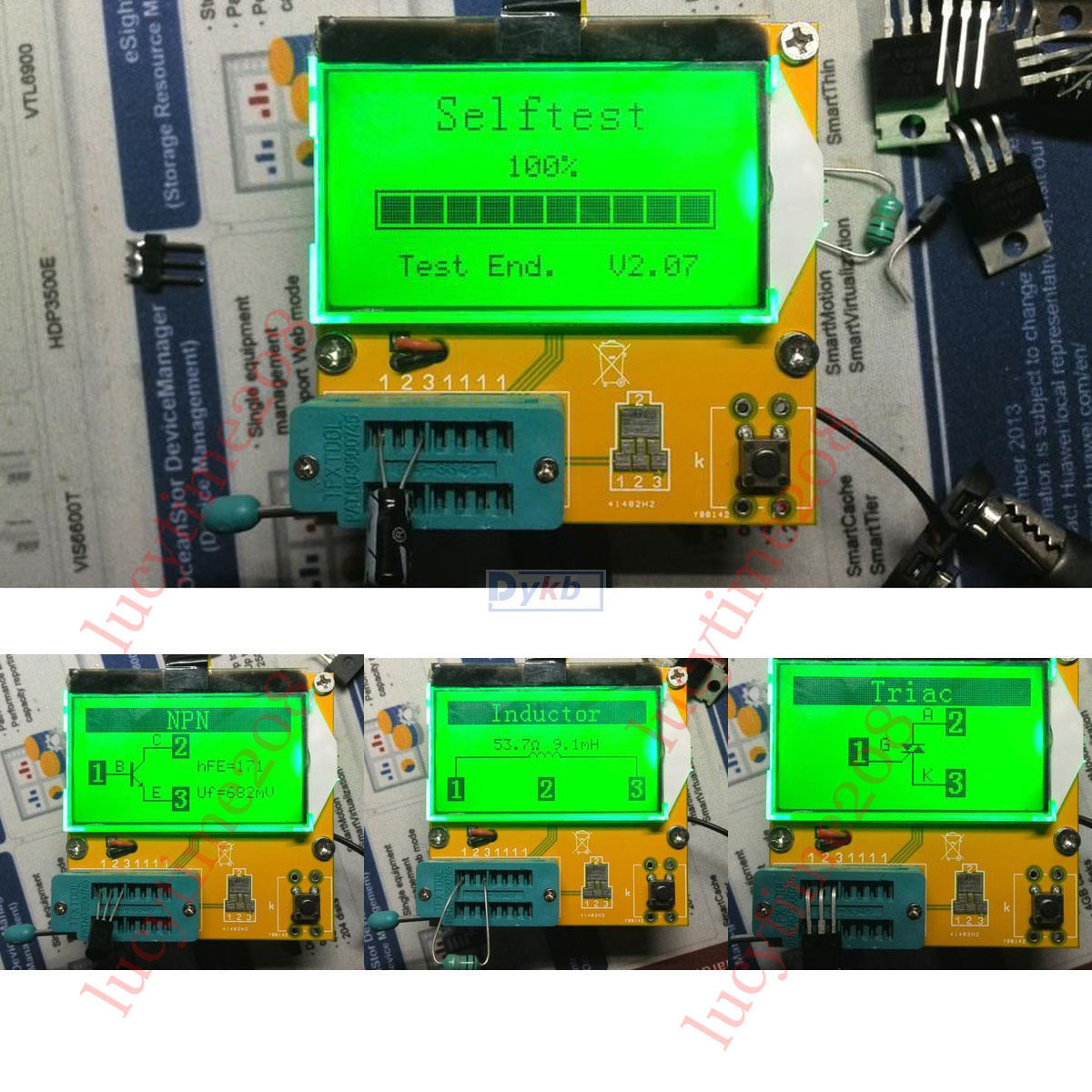
In the meantime, I received a whole bunch of new stuff. The most interesting things are some goldcaps, solar panels, LCR meter, RF24 modules with antenna, partly dead MX510 mouse (as a spare part donor for the mouse I am using for years), and other small stuff. I should do an unboxing video one day :)
I did some experiments with the goldcaps, and I'll put together some more info in upcoming days.
úterý 17. března 2015

sobota 7. března 2015
Barbie bed

 I used my old good Proxxon table saw. The saw is fastened to a little plank of wood by four screws, and then the plank is fastened to the table with two clamps. To cut big pieces of plywood more or less rectangular, I made a bigger working are of plywood and some squared timber. It's not perfectly rectangular, and has other problems, but with a bit of effort, the results are at least satisfying.
I also made another attempt on the high voltage power supply for GM counter. The results are even worse than the previous attempt, and I am wondering why. I ordered some 9.1MOhm SMD resistors, and next attemp will use SMD transistors, the same I used for the very first supply.
Some minor changes were done to the central node code as well, but nothing major. I started to look into the available libraries for RFM12B that could be used with Due. I found one, using SPI port, but I am a bit skeptical about it - plus, of course, I have no free SPI CS pins. However, I am considering getting rid of the display, and if nothing else, I can just convert an existing library to use SW SPI.
Why removing the display? First, I am not sure how useful it will be in final product. It is pretty useful now, but the nRF24L01 modules have quite short range, and even with 250kbps, the signal doesn't make it through walls to the bathroom. To overcome this, I am considering putting the central node to more central location in the appartment, but then the display will be useless. Second, as clearing the screen takes over 100ms, it would greatly impact the response time of the RF24Network, eventually losing packets randomly, and I don't like that idea.
čtvrtek 5. března 2015
Meteo node II
I'm reporting some progress on the meteo node today. It worked more or less on first power on - with the exception of the RF24 not working at all, but the problem was easy to discover - swapped pins MISO and SCK! I don't get how could I make that mistake as I was following the table, and I am sure I counted the pins right. Anyway, after fixing that, all worked just fine.
The node still misses the battery measurement support, but I am going to leave it out until I know what kind of battery I am actually going to use. The voltage divider will depend on if I am going to power it from AA cell, LiIon cell or something else. I ordered some samples of step-up converter from Linear, which could be used, and I am considering those MCP1640 from Farnell (they're still the cheapest), but that needs some testing first.
The high voltage capacitors finally arrived from Austria - sheesh, it took more than a week to get them shipped and delivered, and given the S/H price... I just hope they're any good, or else I ended up with 200 pieces of junk. They're surprisingly small for 1KV 10nF capacitors. Anyway, I'll see if I find some time this weekend to build - yes, you guessed - yet another HV power supply for GM tubes. In fact, I am thinking about putting together the not-so-common components and offer it on eBay for some reasonable price, saving people from hassle of getting bits and pieces here and there. I have a load of MPSA42 transistors, 10nF capacitors, 10mH inductors, fuse holders etc etc.
The lead accu I ordered month ago still did not arrive, and eBay returned me the money. I ordered some goldcaps today, and will do further experiments with them. I'll get two 22F/2.3V ones that could be great if I'll manage to make the step up converters working.
The node still misses the battery measurement support, but I am going to leave it out until I know what kind of battery I am actually going to use. The voltage divider will depend on if I am going to power it from AA cell, LiIon cell or something else. I ordered some samples of step-up converter from Linear, which could be used, and I am considering those MCP1640 from Farnell (they're still the cheapest), but that needs some testing first.
The high voltage capacitors finally arrived from Austria - sheesh, it took more than a week to get them shipped and delivered, and given the S/H price... I just hope they're any good, or else I ended up with 200 pieces of junk. They're surprisingly small for 1KV 10nF capacitors. Anyway, I'll see if I find some time this weekend to build - yes, you guessed - yet another HV power supply for GM tubes. In fact, I am thinking about putting together the not-so-common components and offer it on eBay for some reasonable price, saving people from hassle of getting bits and pieces here and there. I have a load of MPSA42 transistors, 10nF capacitors, 10mH inductors, fuse holders etc etc.
The lead accu I ordered month ago still did not arrive, and eBay returned me the money. I ordered some goldcaps today, and will do further experiments with them. I'll get two 22F/2.3V ones that could be great if I'll manage to make the step up converters working.
středa 4. března 2015
Meteo node

There is a few things that are still missing - the battery voltage measurement, and I should probably switch off the sensors when Arduino is sleeping to conserve power. The DHT22 draws something like 40uA when idle, which is pretty much a lot of power. Now the question is, how to do that? Using a PNP transistor as a high side switch should work, but I am a bit worried of the voltage drop on it. Of course that would not work at all with CR2032 (that's why I did not add this to the node yet). Another option is to power the sensor from the Arduino digital pin. That should be pretty easy, but again, I am not sure about the voltage. The safest would be to use something like 3.5V for Arduino, which should be fine for all other devices, like the NRF24L01, and still give a plenty of headroom for powering the sensors. Time to do some measurement tomorrow!
úterý 3. března 2015
Temperature sensors precision

First thing first - the contestants are:
- TMP100 - I2C based sensor from TI in SOT23-6 package
- DS1820 (and similar ones) - 1-Wire based sensor from Dallas / Maxim
- DHT22 - sort of one-wire protocol, temperature and humidity, based on AM2302
As always, I took Arduino, attached LCD display to it and all three sensors, using sample code from Arduino libraries. I did not see any example for TMP100, but Google suggested the Fork Robotics page, and the example described on that page worked just fine. I do not offer the code for download, it's a big mess, and throwing it together took me about ten minutes anyway.
The results are interesting, and reassuring me I can use any kind of sensor without risking the temperatures being too different compared to any other sensor. In other words, I can use the DHT22 for the meteo node, and trust the temperature. There is no need for an additional DS18xx sensor on that node.
I tweaked the code for the central node a little, nothing important. I am considering a change of the packet definition, making just a single structure that will use anonymous structures and unions to describe any kind of sensor packet. I am still not sure if there are any drawback other than the obvious one (prone to mistake). Just to explain what do I mean:
typedef union {This allows me to directly refer to PacketType, BattLevel etc. without 'going into' the Temp structure. Arduino supports this, at least the 1.5.8 version.
SensorPayloadTemperature_t Temp;
SensorPayloadMeteo_t Meteo;
struct {
uint8_t PacketType;
uint8_t BattLevel;
uint8_t ___pad[2];
uint16_t SensorId;
};
} SensorPayload_t;
pondělí 2. března 2015
Arduino Due rant and debouncing
Mostly ranting today. I wonder who came up with the brilliant idea to name Arduino Due this way. Did they realize that 'due' is regular English word, and googling up 'Arduino Due xxx', where xxx is a description of the problem, or a library name, will point to regular Arduino article that accidentally uses the word 'due'?
Yeah, I can use doublequotes, but I usually forget to do that. What will be the next great name? 'Arduino And'? 'Arduino The'? Or even better, 'Arduino Sex'? (Actually, that leads to interesting results in Google already). I am already pissed off with that misplaced connector problem (as I described few days ago), and I am more and more believing that those Italians should stick with what they do best (ice cream and pizza), and for gossake don't mess with electronics! (Just kidding, I still like Arduino).
Anyway. I spent a few hours adding button support, or better said debouncing, and using the button to switch between different screens on the display. I tried to use regular Bounce2 library, but that does not compile, and I didn't want to mess with the library. The easiest solution was to use my old debouncing code that also supports autorepeat. The code isn't mine, I found it years ago, and works like a treat. Just call this piece of code in regular intervals, like 10ms, and tweak the constants according to how often the code is being called.
(I just looked up in my old sources that it's based on algorithm by guy KimmoHop from avrfreaks.org)
I reviewed the CR2032 node and noticed that there's a potential short circuit that might ground the analog input of the battery voltage measurement when wet. I fixed that, and will give it a try overnight. The voltage is 2890mV right now (it has changed a little after I cut the traces that were likely causing the problems, which suggests they actually had some conductance... or not?)
Yeah, I can use doublequotes, but I usually forget to do that. What will be the next great name? 'Arduino And'? 'Arduino The'? Or even better, 'Arduino Sex'? (Actually, that leads to interesting results in Google already). I am already pissed off with that misplaced connector problem (as I described few days ago), and I am more and more believing that those Italians should stick with what they do best (ice cream and pizza), and for gossake don't mess with electronics! (Just kidding, I still like Arduino).
Anyway. I spent a few hours adding button support, or better said debouncing, and using the button to switch between different screens on the display. I tried to use regular Bounce2 library, but that does not compile, and I didn't want to mess with the library. The easiest solution was to use my old debouncing code that also supports autorepeat. The code isn't mine, I found it years ago, and works like a treat. Just call this piece of code in regular intervals, like 10ms, and tweak the constants according to how often the code is being called.
#define DELAY_DEBOUNCE 10
#define DELAY_REPEAT_START 40
#define DELAY_REPEAT 25
void UpdateButtons (void) {GetButtons() returns what buttons are pressed in form of bitmap. Global variable Buttons contains a bitmap of pressed buttons. When you process particular button, clear the corresponding bit in Buttons. The constants above are fine when calling the function every 10ms.
static byte id = 0x00;
static word key_counter = 0;
byte c;
c = GetButtons ();
if (c == 0) { // No key pressed
id = 0;
key_counter = 0;
} else if (c != id) { // New key differs from previous one
id = c;
key_counter = 0;
} else { // New key is the same as previous
key_counter++;
}
if (key_counter == DELAY_DEBOUNCE) { // Debouncing complete
Buttons = id;
} else if (key_counter == DELAY_REPEAT_START) { // Repeated key
Buttons = id;
key_counter -= DELAY_REPEAT;
}
}
(I just looked up in my old sources that it's based on algorithm by guy KimmoHop from avrfreaks.org)
I reviewed the CR2032 node and noticed that there's a potential short circuit that might ground the analog input of the battery voltage measurement when wet. I fixed that, and will give it a try overnight. The voltage is 2890mV right now (it has changed a little after I cut the traces that were likely causing the problems, which suggests they actually had some conductance... or not?)
neděle 1. března 2015
Telling the time
A bit lazy day today, spent on eBay and selling some old junk, getting what was already sold ready for shipment, and playing with the Due central node a little. The node now retrieves the time via NTP and sets its local clock, another step towards telling the time to all nodes that are interested. I did some minor changes of the code, added button and photoresistor to the node, and improved the LED support to make them blink smoothly.
The CR2032 node reported battery dead in the morning. I measured the CR2032 cell and found out that the voltage is perfectly fine. That explains what is going on - it must be the air moisture. Either it condenses on the resistors of the voltage divider, or the cheap chinese paper PCB gets soaked and its resistence decreases. I know it's a really cheap PCB and I am not blaming anyone, I bought a pack of fifty for few euros and they so far performed well. Anyway, I'll leave one of them on balcony for a day and see if it will show any measurable resistence.
If the problem is in the air moisture condensing on the resistors of the voltage divider (they're something like 1M5 and 330K if I recall the values correctly), I'll use standard through-hole resistors for the divider, and maybe smaller values. It should not be a problem, I am grounding the lower end of the divider before measurement, thus it should not draw any noticeable current anyway.
Speaking of power consumption - after the node dried up and the reported voltage stabilised at 2920mV, it didn't change a single bit. Did I finally succeed in creating a sensor node that will run off the CR2032 cell for a few months at least? *evil grin*
The CR2032 node reported battery dead in the morning. I measured the CR2032 cell and found out that the voltage is perfectly fine. That explains what is going on - it must be the air moisture. Either it condenses on the resistors of the voltage divider, or the cheap chinese paper PCB gets soaked and its resistence decreases. I know it's a really cheap PCB and I am not blaming anyone, I bought a pack of fifty for few euros and they so far performed well. Anyway, I'll leave one of them on balcony for a day and see if it will show any measurable resistence.
If the problem is in the air moisture condensing on the resistors of the voltage divider (they're something like 1M5 and 330K if I recall the values correctly), I'll use standard through-hole resistors for the divider, and maybe smaller values. It should not be a problem, I am grounding the lower end of the divider before measurement, thus it should not draw any noticeable current anyway.
Speaking of power consumption - after the node dried up and the reported voltage stabilised at 2920mV, it didn't change a single bit. Did I finally succeed in creating a sensor node that will run off the CR2032 cell for a few months at least? *evil grin*
Přihlásit se k odběru:
Příspěvky (Atom)